ECF2026 Highlights Unconventional Energy Development, Technology Innovation and International Cooperation
The 16th Asia-Pacific Unconventional Energy Conference connects field experience with emerging opportunities in geothermal energy, natural hydrogen and carbon storage.
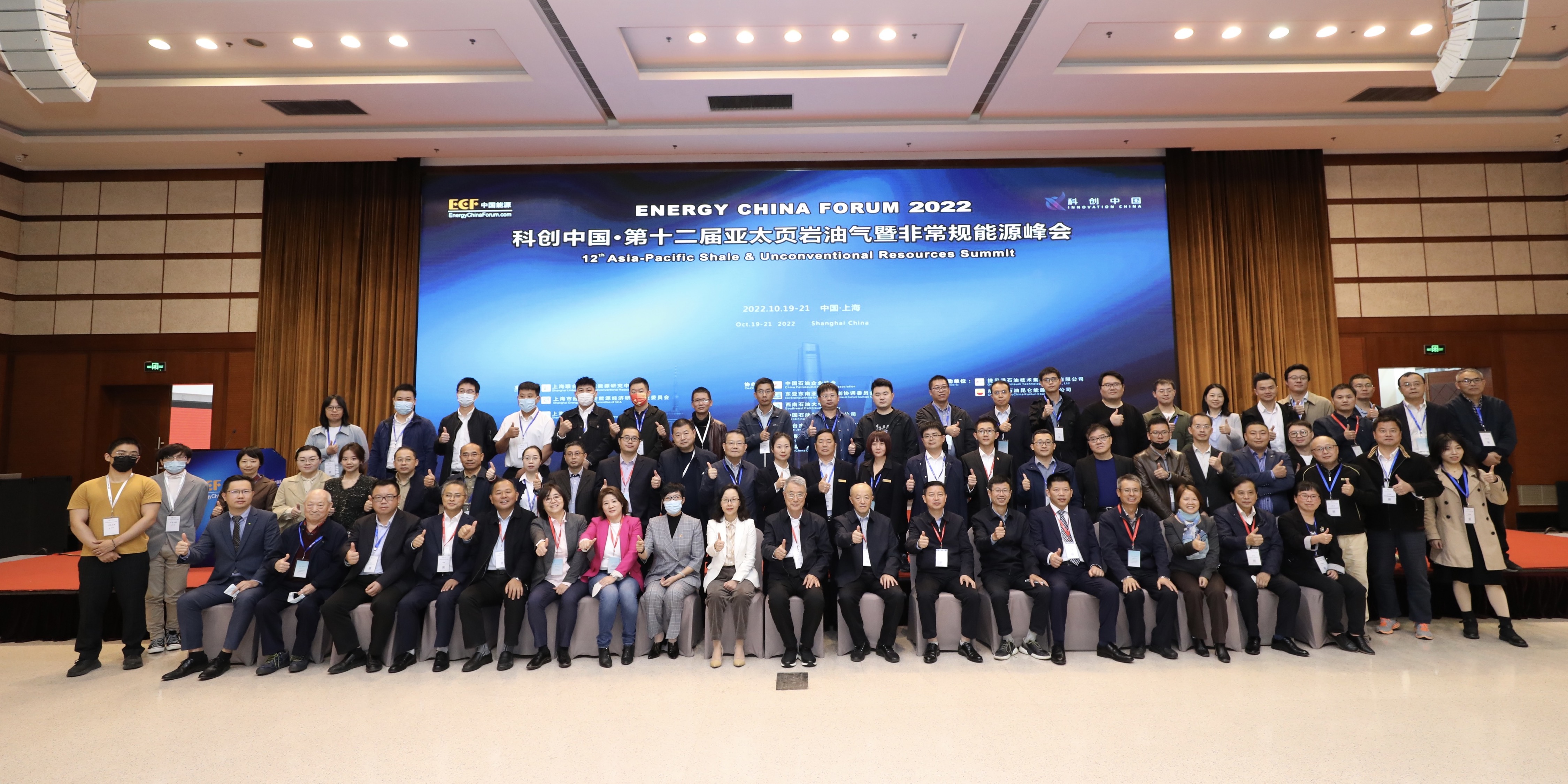
Energy China Forum 2026 (ECF2026) took place in Shanghai on October 20–23, 2026, under the theme “Resilience · Efficiency · Impact.” Representatives from energy companies, research institutions, universities and industry organizations in China and abroad exchanged experience in unconventional oil and gas development, intelligent technologies, advanced equipment and international cooperation.
The conference was organized by the Shanghai United Institute for Unconventional Resources (SUI) and the Energy Economics Research Committee of the Shanghai Economist Association, with guidance from the Shanghai Association for Science and Technology and co-hosting support from the National Engineering Research Center for Coalbed Methane Development and Utilization.
The programme combined a plenary forum with the sixth ECF FracX Hydraulic Fracturing Innovation Symposium, the Geological–Engineering Integration Symposium, an international cooperation roundtable, and presentations of award-winning technologies and research papers. The 11th ECF Energy Technology Innovation Award and Outstanding Paper Awards were also presented.
Energy Security and Development Economics
Energy security provided the context for discussions on how to convert resource potential into reliable, economically viable production.
In his opening address, Zhang Hongtao, Chief Expert of SUI, former Counsellor of the State Council and former Chief Engineer of China’s Ministry of Land and Resources, emphasized two connected priorities: improving the development of shale oil and gas, tight oil and gas, and coalbed methane; and extending oil and gas expertise into geothermal energy, natural hydrogen and underground energy storage.
Yu Haijian, presenting on behalf of Gianni Di Giovanni, Chairman of Eni China and Chief Representative of Eni’s Beijing Representative Office, discussed energy security, the role of natural gas and LNG, low-carbon development and cooperation with China.
Ding Feng, Chief Expert and Deputy Chief Engineer at the Ministry of Natural Resources’ Strategic Research Center for Oil and Gas Resources, outlined developments in China’s oil and gas mineral rights management. Dai Jiaquan, Chief Economist at CNPC’s Economics and Technology Research Institute, examined geopolitical risks and the resilience of China’s oil and gas supply chains.
Gao Deli, a member of the Chinese Academy of Sciences and Professor in the College of Petroleum Engineering at China University of Petroleum (Beijing), explored factory-style unconventional energy development, including complex well configurations and underground well-factory concepts. His presentation highlighted the need to coordinate geological understanding, engineering design and equipment capabilities to improve efficiency and reduce costs.
Qin Yonghe, Vice Chairman of the CNPC Association for Science and Technology, reviewed the technologies and equipment required for long horizontal sections and complex reservoirs, including rotary steerable systems, measurement while drilling, intelligent rigs and fracturing equipment.
In the closing keynote, Zhao Xianzheng, an expert at the CNPC Consulting Center, Distinguished Expert of SUI and Academic Convenor of the ECF Young Experts Group, brought the discussion back to development economics through four priorities: accurate evaluation of productive intervals, fracturing innovation, engineering risk management and integrated project management.
Deep Coalbed Methane and Deep Exploration
Deep coalbed methane was a major focus across the plenary and technical sessions.
Tao Ziqiang, Chief Technical Expert for Gas Field Development at PetroChina Coalbed Methane Company, and Zhao Zhigang, President of the Exploration and Development Research Institute of China United Coalbed Methane, presented experience from the Ordos Basin. Their contributions covered reservoir evaluation, horizontal drilling, fracturing, production management and the coordination of subsurface development with surface facilities.
Related presentations examined seismic characterization, geological and engineering sweet-spot prediction, resource accumulation and industry standards. Together, they addressed the steps needed to move from resource discovery to sustained production, while recognizing the continuing challenges of cost, decline rates and reservoir variability.
Zou Wei, presenting on behalf of Xu Changgui, Chief Scientist and Chief Geologist of CNOOC, reviewed advances in offshore deep and ultra-deep exploration, including new understanding of reservoir formation and hydrocarbon preservation.
Zhu Guangyou, Dean of the School of Geosciences at Yangtze University, discussed findings from seven wells exceeding 10,000 metres and their implications for deep fluids, hydrocarbon occurrence and reservoir space. Liang Xing, former Deputy General Manager and Chief Geologist of PetroChina Zhejiang Oilfield and an ECF Distinguished Expert, examined the distinctive geology of shale gas in mountainous southern China and the engineering challenges it creates.
Fracturing, Equipment and Intelligent Operations
The sixth ECF FracX Hydraulic Fracturing Innovation Symposium connected advances in treatment design, materials, equipment, monitoring and decision-making with their effects on field performance.
Jiang Tingxue, Chief Expert at Sinopec Group and Convenor of the symposium, presented progress in ultra-deep shale gas fracturing, addressing fracture initiation, proppant placement and the maintenance of long-term conductivity under demanding conditions. Zhou Fujian, Professor at China University of Petroleum (Beijing) and an ECF Distinguished Expert, drew on experience from the US Permian Basin to discuss simultaneous multiwell fracturing, real-time monitoring and operational optimization.
Zhao Mingwei, presenting on behalf of Dai Caili, Vice President of China University of Petroleum (East China), introduced an integrated approach to fracturing, reservoir energy replenishment and oil displacement. The research explored how functional fluids and treatment design could improve sustained production and oil recovery.
International engineering experience added further perspectives. Hernán Buijs, Hydraulic Fracturing Technical Expert at Abu Dhabi National Oil Company (ADNOC), presented lessons from the first successful offshore hydraulic fracturing operation in the UAE, including challenges associated with geomechanics, fluid loss and proppant placement. Chen Haining, Technical Manager for Completions at Baker Hughes China, discussed intelligent completions, combining downhole sensing with remote flow control to improve water management and production performance.
Intelligent operations featured throughout the programme. A presentation on the “Changlong” intelligent drilling system from CNPC Great Wall Drilling Company described the integration of surface and downhole data, parameter optimization and execution feedback.
Sheng Mao, Professor at China University of Petroleum (Beijing) and an ECF Senior Young Expert, discussed intelligent characterization and decision support for hydraulic fracturing. Other contributions addressed AI-assisted production forecasting and well placement, near-bit geosteering, drilling vibration control and intelligent monitoring of well-control equipment.
The common emphasis was on how these technologies can improve decisions, equipment reliability and operational results under actual field conditions.
Applying Subsurface Expertise to New Energy Opportunities
The conference also explored how capabilities developed in the oil and gas industry could support emerging energy applications.
Young Joo Lee, Principal Researcher at the Petroleum and Future Energy Research Center of the Korea Institute of Geoscience and Mineral Resources (KIGAM), presented international natural hydrogen research, including the geological conditions governing hydrogen generation, migration, accumulation and preservation.
He Zhiliang, Executive Council Member and Deputy Secretary-General of the Chinese Petroleum Society and former Deputy General Manager of Sinopec’s Science and Technology Department, compared energy transition strategies among Chinese and international oil and gas companies, emphasizing the importance of technical strengths, resource conditions and project economics.
Jiang Shu, Dean of the College of Geosciences at China University of Petroleum (Beijing), discussed the evaluation and potential co-development of geothermal energy, helium, lithium and other resources associated with oil and gas systems.
Field examples helped connect these opportunities with engineering practice. Jin Xianpeng, Head of the Hot Dry Rock Exploration and Development Division at the Center for Hydrogeology and Environmental Geology Survey, China Geological Survey, presented work on hot dry rock reservoir development in Gonghe, Qinghai, illustrating the application of drilling, fracturing and reservoir evaluation capabilities to deep geothermal energy.
Zhang Chuanbao, presenting on behalf of Lü Qi, Deputy Director of the Exploration and Development Research Institute of Sinopec Shengli Oilfield, shared technical progress and operating experience from Shengli Oilfield’s million-tonne-scale CCUS project.
Amin Azdarpour, Associate Professor at Northeast Petroleum University, examined international experience in moving from CO₂ enhanced oil recovery to geological storage. A presentation delivered by Li Xuesong on behalf of Tina Reine, Chief Commercial Officer of Zefiro Methane Corp., addressed methane abatement through integrated measurement, well-integrity assessment, permanent plugging and independent verification.
International Cooperation: From Capabilities to Projects
The international roundtable focused on market demand, technology capabilities and project delivery.
Participants discussed opportunities in Southeast Asia and Africa, interest in Chinese engineering and equipment, and the conditions required to develop workable partnerships. Contributions from Doyin Dohee-Jung, Executive Director of Mzuzah Energy & Infrastructure Group, and Thomas Kuud Nyanat of Malaysia’s Upland Big Oil emphasized the importance of understanding local customers, commercial practices, infrastructure requirements and financing conditions.
The discussion highlighted that successful technology transfer depends on matching capabilities to specific resource conditions and market needs.
In a video address, Yongzheng Ma, Director of the Technical Secretariat of the Coordinating Committee for Geoscience Programmes in East and Southeast Asia (CCOP), reviewed more than a decade of cooperation with ECF. He outlined further collaboration on promoting ECF and its Innovation Award across CCOP Member Countries, expanding nomination channels, supporting expert and youth exchanges, and sharing information on standards and databases.
Recognizing 21 Technology Achievements
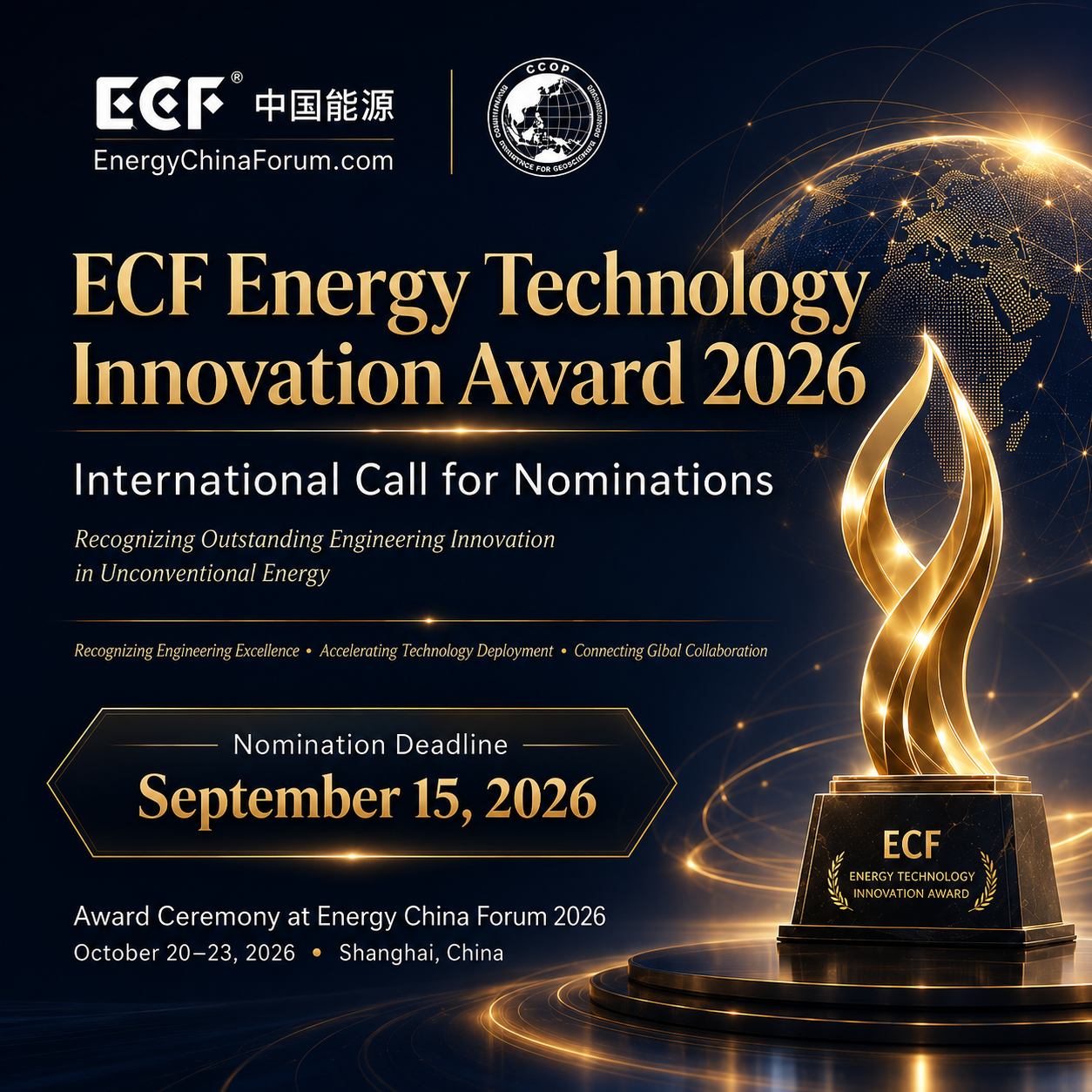
The 11th ECF Energy Technology Innovation Award recognized 21 achievements: six First Prizes, seven Second Prizes, seven Third Prizes and one Technical Innovation Award.
The recognized projects covered ultra-deep exploration, complex-well drilling and completion, intelligent drilling, reservoir stimulation, deep coalbed methane, enhanced oil recovery and low-carbon applications.
First Prize recipients included work on ultra-deep drilling discoveries and geological–engineering innovation, integrated intelligent drilling technologies for unconventional oil and gas, and ultra-short-radius horizontal drilling for improved oil recovery. A natural gas demand forecasting model for power generation developed by Shanghai Shenergy Fengxian Thermal Power Co., Ltd. received the Technical Innovation Award.
Kang Yuzhu, a member of the Chinese Academy of Engineering and Chair of the award review panel, introduced the review process by video. He emphasized originality, demonstrated application results and the potential for wider adoption.
The award ceremony was hosted by He Zhiliang. Dedicated award and paper sessions gave teams an opportunity to present their work and discuss it with industry peers.
Connecting Conference Discussions with Engineering Practice
The programme also included a technical visit to Shanghai Shenergy Lingang Gas Power Co., Ltd., focusing on combined-cycle power generation, intelligent control and flexible operation in support of the electricity grid.
Since its first edition in 2011, ECF has developed from a shale gas forum into a platform addressing a broader range of unconventional energy resources and technologies. ECF2026 continued that development by connecting advances in oil and gas production with emerging subsurface energy applications—and bringing Chinese field experience into dialogue with international research, engineering and commercial perspectives.
SUI and ECF thank all speakers, delegates, co-organizers, supporting organizations and sponsors for their contributions. Further conference reports and selected technical highlights will be shared through ECF’s communication channels.
-
Dai Houliang Inspects Daqing Oilfield2026-08-10