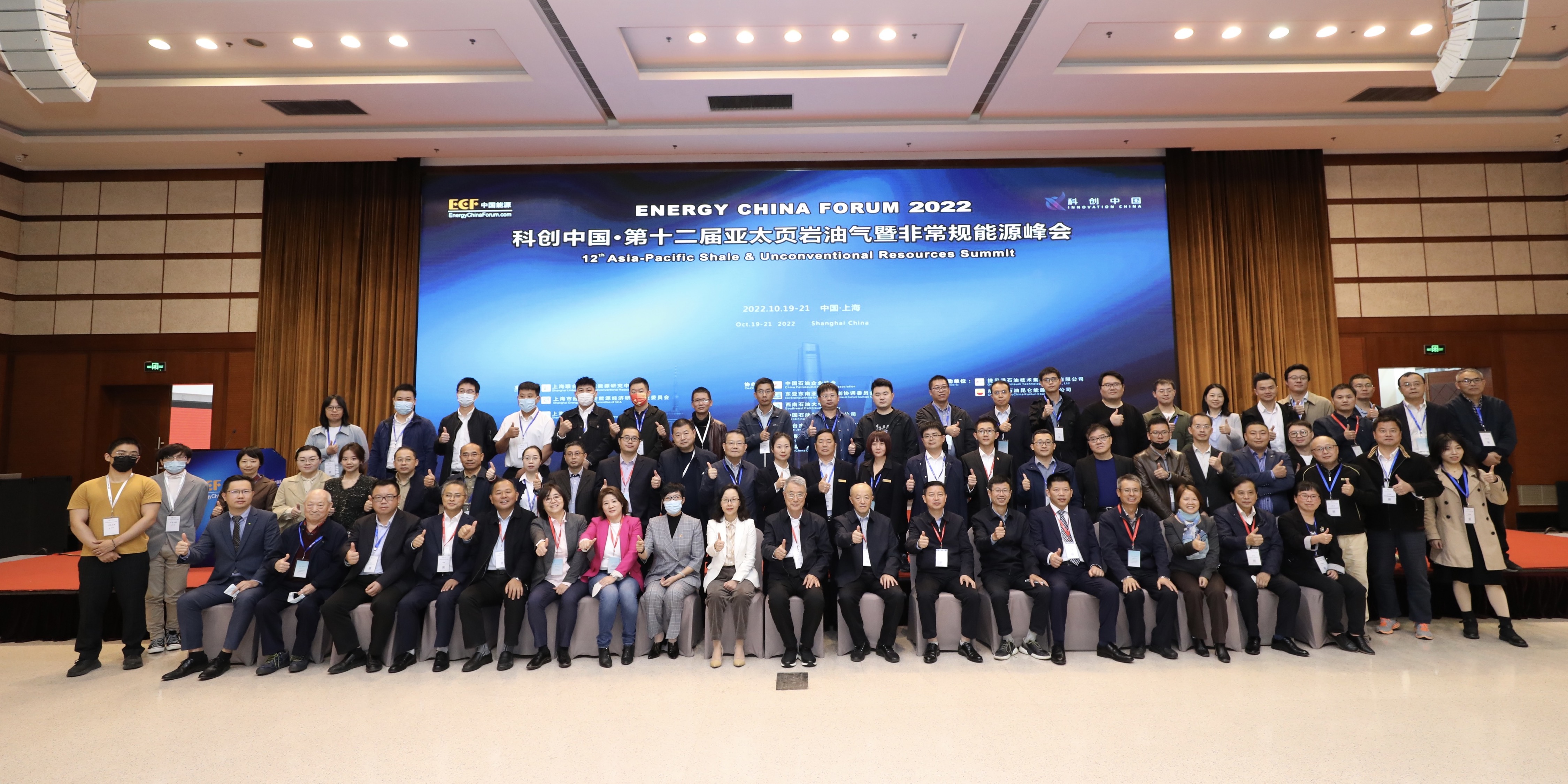
11th ECF Tech Awards - Scientific and Technological Progress Award - Silver Award
Project:AI Logging Interpretation and Evaluation System for Shale Oil and Gas Reservoirs and Its Application
Company:Sinopec East China Oil & Gas Branch
Project Title: AI Logging Interpretation and Evaluation System for Shale Oil and Gas Reservoirs and Its Applications
Participating Enterprises: Sinopec East China Oil & Gas Branch
Sinopec Jingwei Company Limited, East China Measurement & Control Branch
Award Received: Scientific and Technological Progress Award
Project Number: ECF-2026-SYE-1001
Main Participants: Yao Hongsheng, Chen Xingming, Wang Xin, Hu Wei, Li Guofeng, Wang Kaiming, He Guisong, Zan Ling, Ding Anxu, Sun Wei, Yang Zhengmao, Mei Junwei, Wang Mingyun, Qiu Weisheng
Expert Review Comments:
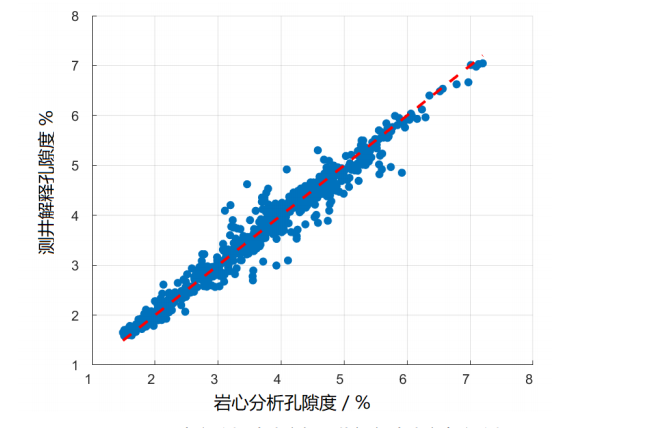
This project improves the consistency and speed of shale-reservoir evaluation by combining core, logging and mud-logging data with AI interpretation. Joint geological and engineering sweet-spot identification connects the interpretation workflow to well placement and fracturing design, giving the software relevance beyond data processing. More than 140 well datasets have been processed, with an interpretation time of approximately ten minutes per well. This application experience supports further deployment. The achievement provides an independently developed tool for rapid assessment of complex shale reservoirs, with practical value in using available data more effectively, standardizing interpretation workflows and accelerating collaboration between geology and engineering teams.
Main Innovations:
1. Establish a multi-source geological data fusion system integrating core, well logging, and mud logging data to create a seamless data pipeline across the "core-logging-engineering" chain. 2. Develop an end-to-end AI-driven automated interpretation system that performs joint inversion of multiple well logging curves, including natural gamma, resistivity, and acoustic logs. This system improves the interpretation accuracy of key reservoir parameters—such as bedding fracture density, porosity, and oil saturation—by more than 25% compared to traditional methods. 3. Innovate a dual-dimensional "geology-engineering" sweet spot identification model by deeply integrating formation brittleness index, stress field distribution, natural fracture density, and fracturing response data. This enables intelligent prediction of sweet spot spatial distribution, achieving an identification accuracy rate exceeding 90%.
Main Uses and Technical Principles:
The AI logging interpretation system is designed to address the core challenges of low efficiency, high subjectivity, and insufficient accuracy in traditional manual interpretation methods under the conditions of strong heterogeneity and complex lithology in shale oil and gas reservoirs, enabling end-to-end automation from raw logging data to reservoir evaluation outcomes. Its technical foundation lies in applying machine learning algorithms to perform nonlinear modeling of multiple logging curves—such as gamma ray, resistivity, and acoustic transit time—to identify distinct lithological assemblages and fluid response patterns, thereby constructing predictive models for reservoir petrophysical parameters (e.g., porosity, oil saturation) and classification evaluation models. The system integrates modules for data ingestion, curve standardization, missing value imputation, parameter computation, and reservoir classification, delivering an intelligent, streamlined interpretation workflow that significantly enhances interpretive consistency and operational efficiency, providing rapid and precise geological decision-making support for shale oil and gas exploration and development.