11th ECF Tech Awards - Scientific and Technological Progress Award - Gold Award
Project:Ultradeep Drilling Discoveries and Major Geological-Engineering Innovations and Applications
Company:Yangtze University
Project Title: Ultradeep Drilling Discoveries and Major Geological-Engineering Innovations and Applications
Participating Enterprises: Yangtze University
Award Received: Scientific and Technological Progress Award
Project Number: ECF-2026-SYE-1004
Main Participants: Zhu Guangyou, Tan Qingwen, Duan Pengzhen, Zhu Sen, Wang Ruilin, Liu Fangkai, Luo Xin, Chen Siyu, Xu Kai
Expert Review Comments:
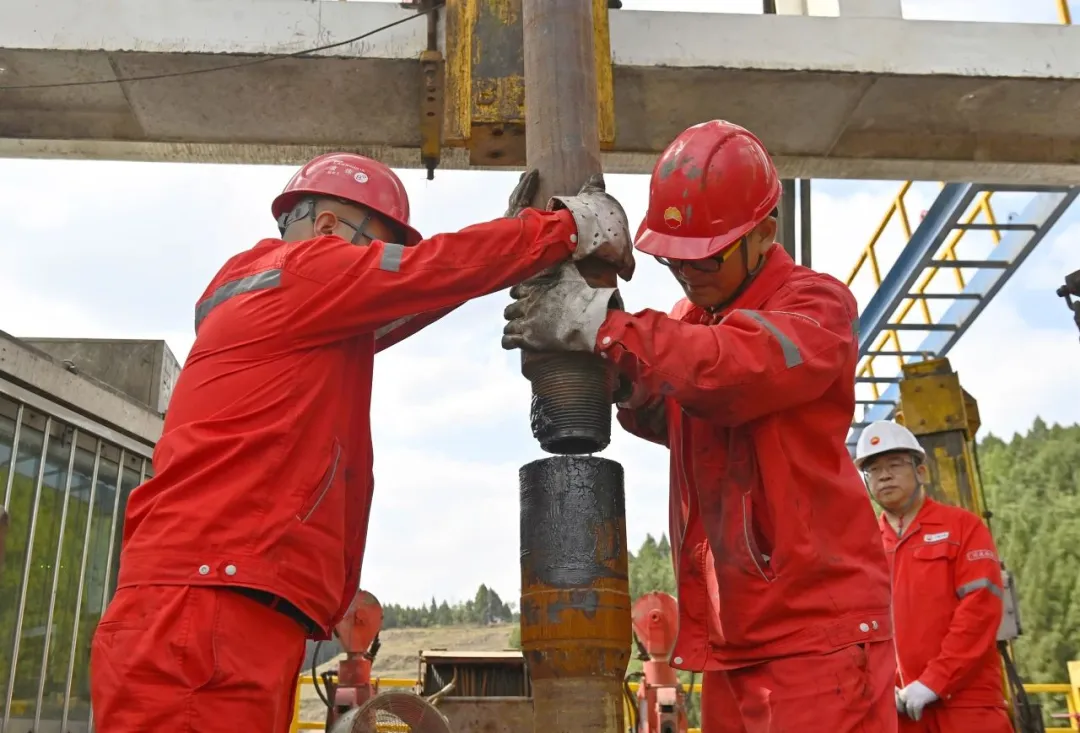
The scientific strength of this achievement is its use of samples and measurements from wells reaching approximately 10 km to constrain ultra-deep petroleum geology with direct evidence. Findings on the joint control of organic-matter preservation by pressure and thermal history, together with evidence of deep reservoir space and compartmentalized overpressure, advance understanding of hydrocarbon formation and preservation. Linking geological heterogeneity to wellbore instability, kicks and losses also strengthens the connection between geological interpretation and drilling decisions. The work has important implications for evaluating ultra-deep exploration targets, interpreting deep-well data and integrating geology with engineering. It provides an evidence-based foundation for resource assessment and technical exchange across basins.
Main Innovations:
The project establishes a petroleum-geology framework for the 10-km subsurface using direct samples and measured data from ultra-deep wells in the Tarim, Sichuan and Junggar basins. It challenges temperature-only and conventional depth-limit concepts by showing that pressure and thermal exposure jointly control deep organic-matter preservation. It demonstrates that effective source rocks, reservoir space, active fluids and compartmentalized overpressure can persist below 10 km, and develops new concepts for long-lived ancient petroleum systems, fracture-cavity accumulation and geology-engineering coupling. These advances open a new era of exploration at ten-kilometer depths.
Main Uses and Technical Principles:
The results support geological prediction for 10-km-class wells, sample interpretation, hydrocarbon-resource evaluation, target selection for testing and integrated geology-engineering decisions. The approach uses direct cuttings/core observations, fluid inclusions, geochemical data, pressure-temperature records and drilling responses to reconstruct tectonic, sedimentary, diagenetic and petroleum-system evolution. It evaluates source-rock effectiveness, reservoir space, fluid activity and pressure compartmentalization, and links geological heterogeneity to influx, losses and wellbore instability, shifting ultra-deep assessment from indirect inference to borehole-constrained evidence.