11th ECF Energy Technology Innovation Awards - Technological Improvement Award
Project:Development of a Natural Gas Consumption Forecasting Model for Power Generation
Company:Shanghai Shenergy Fengxian Thermal Power Co., Ltd.
Project Title: Development of a Natural Gas Consumption Forecasting Model for Power Generation
Participating Enterprises: Shanghai Shenergy Fengxian Thermal Power Co., Ltd.
Award Received: Technological Improvement Award
Project Number: ECF-2026-SYE-1002
Main Participants: Zhang Wenlin
Expert Review Comments:
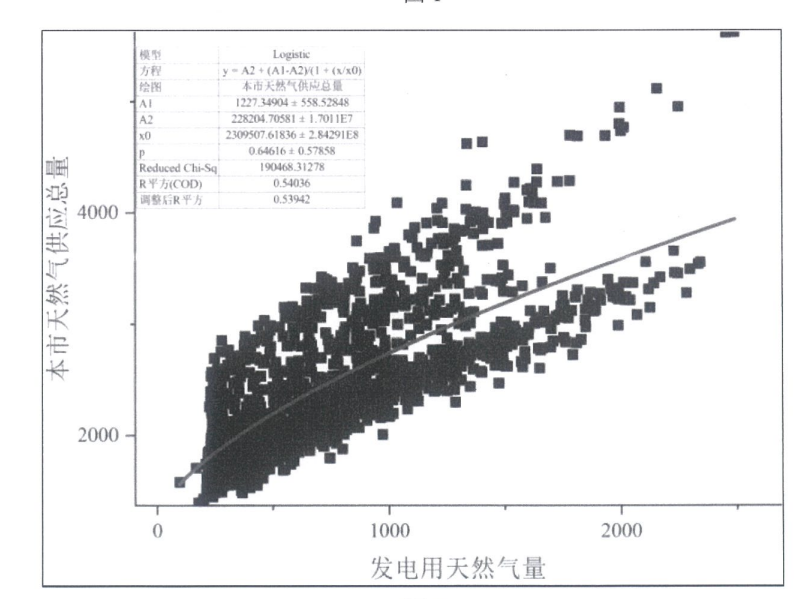
This project applies random forests to forecast natural gas demand for power generation, combining historical load, weather, fuel-supply and related energy data. It improves planning for demand shaped by nonlinear interactions among multiple factors. A test-set R² of 0.932, an actual testing deviation rate of −2.00% and an average deviation of 1.93% support its practical relevance. The innovation lies in connecting an established algorithm with company data and dispatch requirements, providing a better basis for aligning procurement and gas supply with expected consumption. Its clear implementation path and compatibility with existing management workflows make it a useful reference for gas-fired generators with comparable data resources.
Main Innovations:
This project develops a natural gas consumption forecasting model and methodology for gas-fired power generation. Historical gas-load data, meteorological data, economic indicators, LNG supply dynamics and imported electricity generation are collected daily over a defined period to construct a multidimensional feature dataset. After preprocessing, a Random Forest algorithm integrates 11 key influencing factors. The model achieves an R² of 0.989 on the training set and 0.932 on the test set. Actual testing for 2023–2024 records a deviation rate of only -2.00% and an average deviation of 1.93%. Its ability to handle high-dimensional, nonlinear data outperforms traditional methods. Accurate forecasts support scientific gas dispatching, ease supply pressures caused by excessive peak-to-valley demand fluctuations and ensure stable gas supply for power generation.
Main Uses and Technical Principles:
A Random Forest algorithm integrates 11 key factors, including historical natural gas-load data, meteorological data, LNG supply dynamics and hydropower generation. The model achieves an R² of 0.989 on the training set and 0.932 on the test set. Actual testing for 2023–2025 records a deviation rate of only -2.00% and an average deviation of 1.93%. It outperforms traditional approaches in handling high-dimensional, nonlinear data. The precise forecasts support scientific natural gas dispatching, ease supply pressures caused by excessive peak-to-valley gas-demand fluctuations in Shanghai and ensure stable gas supply for power generation.