CNPC Advances Large-Scale Coal Rock Gas Development
As of December 6, 2025, PetroChina’s proven geological reserves of coal rock gas have exceeded 960 billion cubic meters, with daily gas output surpassing 11 million cubic meters and cumulative gas production in 2025 expected to reach 4.2 billion cubic meters.
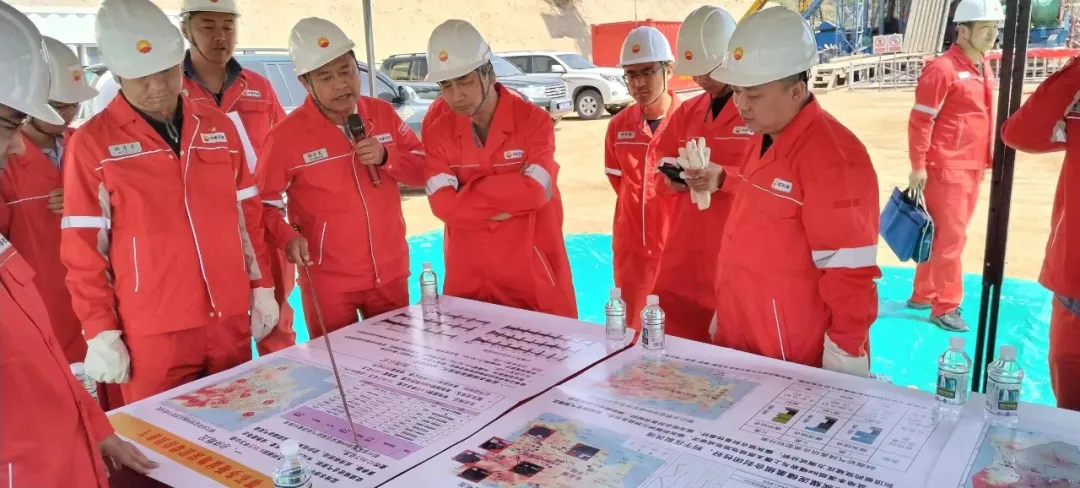
These impressive achievements mark a new stage in the large-scale development of coal rock gas in China, injecting strong momentum into safeguarding national energy security and promoting the green and low-carbon energy transition.
Coal rock gas is natural gas occurring in coal-bearing rocks, existing in both free and adsorbed states. Compared with conventional coalbed methane, it features the “five highs”: high pressure, high temperature, high gas content, high saturation, and a high proportion of free gas. Studies show that the proportion of free gas can exceed 20%, enabling efficient development driven by formation energy and allowing gas to be produced immediately upon well opening.
The coal rock gas R&D team of PetroChina’s Research Institute of Petroleum Exploration and Development has achieved independent innovation in core technologies.
On the experimental front, the team developed the industry’s first skid-mounted mobile system for coal rock gas content measurement, established pressure-preserved coring and gas content testing and analysis technologies, and overcame challenges in accurately measuring total gas content, free gas volume, and their proportions, forming a rapid on-site “sweet spot” evaluation technology.
On the theoretical front, researchers scientifically defined the fundamental concept of coal rock gas, revealed the “three-field controlled accumulation” mechanism, and established an understanding of the “four-factor gas control” enrichment pattern involving coal rank, coal quality, burial depth, and preservation conditions.
In terms of development, the team proposed the concept of energy-focusing fracturing for the first time, forming a suite of technologies and supporting processes—including development policy optimization, refined production and drainage control, horizontal well EUR evaluation, and high-pressure hydraulic slotting with composite oscillatory cavity creation—significantly enhancing single-well productivity.